Continued Research Intentions
Updated: Apr 8, 2025
Rome and environs en situ March 30th, 2025

I have consumed much media, information and knowledge with the ease of access. Yet, I ache for more ways to learn and grow as both an artist and a professional. I realize that as soon as one stops learning new things, you may as well commit to stagnation. An Architect wears many hats and I contend with this daily. I wonder often which versions of my beliefs technical knowledge and aesthetic tastes matter at which proper times in a project. I find that a library of knowledge is critical, not only for its content but more importantly to call on this knowledge in an intuitive way. It matters as much in a lively client meeting as well as an ordered and considered design solution to be able to visualize a series of comparable solutions. Drawing design connections and being able to communicate them are the most base expertise of an architect. The palette of the architect is available at once and everywhere if one is willing to look deeply at their context and applications. Even my humble dwelling of northern New England, I am not without aspirations of the heavens and of heroic tales of men. Just as the first who sought conversation and shelter from the rain I too gaze up a the starry firmament and seek to boast of the novelties of my own constructions as well as to sharpen my conceptions by emulation.
"Be curious, not judgmental" - Walt Whitman
Asking questions of study, I imagine I must supplement my understanding of architecture in Rome. I must more intimately study the origins of western architecture. I have tasted and perhaps lusted, over the opulent visual past and precedent of Roman architecture. As a product of the western world I want to initialize my deeper study in the original Western Empire. I am confronted with the constraints of time that exists in a deep uncovering of the past of Rome; you could spend a lifetime and not know it all. Even in its most esteemed places such as Vatican City, the vast walking archeological museum of the Foro Romano, the increasingly aroused facades of San Carlo alla Quattro Fontaine there is never quite enough time. The assemblage of ancient, classical, medieval, industrial and modern expressions are rich and varied. The power of empires, nation states and republics which have blanketed this countryside maintain distinct and visual expressions of early mercantile wealth. This capitalist mindset and stately trade exposes a rich contextual perspective on geopolitical climates, gamifying interests and exchange of architectural expressions among nations and corporations still today. I'd like to continue to understand themes of war, aggression and how architecture manifest itself within the narratives of powerful patrons to execute the programs of varied peoples during some of the most aggravated times in history.
photos & sketches by author
The measured and intense study through drawing of these architectural facades and spaces will provide me a major foundation for my own professional research in exploring a more complete understanding of contemporary architectural practices. Knowing the past and its streams of architectural thought from their earliest executions will yield a powerful visual dictionary to deploy the nuanced qualities of Architecture. I can grasp at notions of how studying these classical expressions of Architecture can quickly explain rustic and colonial designs of homes and gathering spaces in New England. There are connections to be made of feudal and mercantile policy in the late middle ages of Italy, France, Continental Europe and England through to the early renaissance which established much of the land use law, municipal practices, social fabric and general aesthetic tendencies which flourish similarly in America today.
By engaging initially with architecture of the Roman Republic and comparing it to the splintered feudal, princely and papal states of Italy, I can derive a deep and unwound story of why architectural practice flourished in its expressions of wealth, religion, government, and military into complex programs like laboratories, hospitals and even schools in my professional research to come.
Understanding the downfalls, mistakes and early changes which occurred in these epoch will be invaluable historical precedent and will enable me to refine my own palette of architectural elements in practice. It will be critical to heed the shifts of architectural expression toward a more educated framework for my own career in design with practice as gospel. It is critical to embrace this context despite all the woes and discrepancies that exist in the development of an architecture which is informed, practical, beautiful and lasting. This early acknowledgment of the journey is one that is finite and constrained. 3 months can be schedule out to 100 days of work between April and June.
Arrival to Rome should begin with a week of intense study of the most ancient artifacts available. Day 1-2 Pantheon, with measured floor plan, front elevation and section delivered on Day 3-5. Watercolor renderings to conclude the first drawing set with special attention to the timber frame in the portico.
Day 7-13 The Roman Forum study will begin with a final composite drawing to be completed. The temple of Venus, Temple of Mars and studies of the Forum of Minerva will begin with major study of the existing artifacts, understanding the orders of the bases and remaining crowns. A measured collage of details, elevations and plans will be started based on these initial sketches in pen and ink. Watercolor renderings and site plan telling a mapped expression. of timing and importance. 3 Days for intense historical research to determine dates and formulate a lineage of building initiatives for the creation of the Forum, the Colosseum and reflection on imagined interiors of the Trajan Baths. A façade study of the rising orders of the Colosseum will conclude this drawing set.
Week 2 concludes a brief understanding of ancient Rome. Although there is much more to focus on, the intentions of this trip will revolve around grasping at the long and storied past of Rome as an ever changing architectural landscape filled with nuanced and ambiguous shifts in program and needs. A deeper understanding of Rome will be compared tightly with an understanding of what other works were evolving beyond its hallowed gates. Piazza Navona - dated to the first Century AD where is uses were focused as a place to watch the chariot games, it was later transitioned in the 17th century to a showcase of baroque sensibilities toward classical architecture. Palladian concepts will be useful to bridge this gap as a famous translation of Vitruvius in 1511 Venice was likely the spark for Palladian transitions toward a highly refined classical aesthetic. These Palladian virtues were eventually molded and displaced in favor of the nuance and contradiction, alarmingly at times, of baroque movement and exaggeration in architecture.
Days 14-20 will study this Navona with site plan and composite elevations of surrounding baroque works including the fountain. Trending toward more advanced facades of the baroque era.
Hand sketches in ink and pen will give relief to the edifices of the most decorated and shining current lasting artifacts of Italy. Over one week of continued drawing and exploration in Rome will give a seminal understanding of proceeding and concurrent architectural works which will follow in the second month as a study of one month in Florence, followed by Genoa/Milan and concluding in Venice to study the early merchant states of the republic and ending in their ultimate reunification in the 1800s. These cities will relate to Rome by gaining a fuller understanding of the architectural development of the early Italian states as it will later compare to the unified Italy.
Day 21-28 First with the drawing and research of the Papal State, Saint Peters Church and later St. Peters square by Bernini and other sketches of the thoroughfares and common passageways in and out of the still vibrant Vatican City. The church of San Carlo all Quattro Fontaine by Borromini (1634) will provide valuable insight into the Baroque tradition as it finally eclipsed in Rome. Unbuilt works of Bramante and lithographic plates by Piranesi will also be copied to emaciate the library of theoretical architectural inspiration that is available between 1500-1800 in Rome.
Day 30-40 Florence: To engage again with a baroque sensibility and high renaissance architecture in the three cities mentioned above, I will make comparisons with other surrounding architectural artifacts such as San Giovannis church of the autostrada, in Florence. The Medici Palace will ground my studies in Florence, with sketches of the great Duomo and other seminal works in the form of lighter sketches, charcoal, conte crayon and drawings of fleeting capture en situ.
Day 40-47 Genoa with a curiosity toward the excessive opulence of the palaces belonging to ruling families like Rosso & Gribaldi and its influence as a refined and embellished hosting center for noble families to lodge state guest in the height of the renaissance.
Day 47-60 Venice will conclude the pilgrimage to the early height of the merchant states of Italy. In Venice I will be study the gothic influences on geometric columnar details and the rounded thresholds with their battered reflections of salt water as well as take impressions of architecture with regard to access to water. Further reflections on proximity to water and island living will be of notable interest in this unique urban place. As a designer concerned with sustainable measures of building for lakeside and oceanfront properties I will pay close attention to the natural landscape. I will attempt in my limited time to focus on the overall uses and programs of waterfront design and draw the Santa Maria della Salute as well as Palazzo Ducale to generate elevation and city planning drawings expressing the deep proximity and relationship to waterways and long views from boats. Sketched studies of canal living and residences having visual interest against morning, noon, evening and nighttime relationships to the light.
After 1 month of study in Rome and 1 month of study of the powerful merchant states, I will delve back into Roman/Italian architecture with a facade study of the neoclassical Monument to Victor Emmanuel II, which is the monument to honor the first King of unified Italy from 1855-1935. It is a secular temple giving it divine origination as the center of Italy in the goddess Roma as well its solemn remembrance to the unknown soldier. It remains a national symbol of Italy.
Day 60-75 Elevation Rendering, Detailed Column.
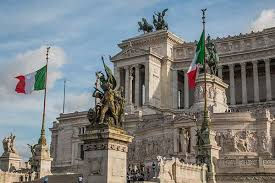
Day 70-75 Wall Sections and Details
A modern monument to entertainment in the city, the Auditorium Parco della Musica by Renzo Piano. Measured comparative collage. The contemporary nature of this building firmly doubts a relationship to classical styles of architecture. However, with reference to Renzo Piano. and his humanistic approach to building I might argue that this building has classical and Vitruvian virtues in its detailing and proportional relationships as well as its use and program.
Day 75-100 will revolve around finishing the remaining unfinished sketches, large format drawings and historical research that have begun.
The final submission will create a visual and written narrative of the rotation of Rome & enviro en situ as the center of a pagan empire to housing a catholic papal state and competing merchant states that flourished. Eventually with some minor study of contemporary Architecture as they relate to baroque expressions of architecture. My eventual explanations of Architecture will relate to the place of my origins in New England USA and the understanding of a layman's expression of classical architecture in early designs of colonial architecture at the turn of the 18th century in America as the chief merchant state today. Materials such as stone, wood and brick have been and will be consistent across the study of all Roman and Italian architecture I study so that I can continue to draw further conclusions on connections and contradictions between these culturally significant architectural artifacts.


Comments